 listicle
Best Coffee Beans for Cold Brew at Home
Table of Contents
- Quick Comparison: Best Coffee Beans for Cold Brew at Home
- What Makes a Bean Right for Cold Brew
- Cold Brew Coffee Grind Size: Why Coarse Wins
- Cold Brew Coffee Ratio: Dialing In Strength
- How Long to Steep Cold Brew for Best Flavor
- Troubleshooting Bitter or Sour Cold Brew
- Conclusion
- Frequently Asked Questions
Last Updated: September 13, 2026
Quick Comparison: Best Coffee Beans for Cold Brew at Home
Finding the best coffee beans for cold brew at home comes down to three things: roast level, grind size, and how long you steep. Get those right and you'll make a smoother, sweeter concentrate than most cafés sell. This guide from Ridgeline Trail & Coffee breaks down what actually matters, plus which beans work best for cold extraction.

Cold brew isn't brewed hot and chilled. It's cold extraction, a slow steeping process where ground coffee sits in room-temperature or cold water for hours. That low temperature changes everything about which bean you should pick.
Here's the core tension most guides skip: cold water doesn't extract the same compounds hot water does. You get less acidity, less bitterness, and more natural sweetness, but only if the bean has something worth extracting. A stale, thin roast stays thin. A dark, oily roast can turn harsh over a long steep.
Below, we'll cover roast levels, grind size, ratios, steep times, and how to fix a batch that tastes off. We'll also point you to beans blended specifically for cold brew so you're not guessing.
| Factor | Best Choice | Why It Matters |
|---|---|---|
| Roast level | Medium to dark | Low-acid, sweeter extraction |
| Bean type | Blend or single origin | Blend = balance, single origin = clarity |
| Grind size | Coarse | Prevents bitterness and silt |
| Ratio | 1:8 coffee to water | Concentrate strength |
| Steep time | 16-18 hours | Full flavor without harshness |
What Makes a Bean Right for Cold Brew
The right bean for cold brew is a medium to dark roast with low perceived acidity, dense and evenly sized beans, and a roast date recent enough that the aromatics are still intact. Cold water extracts slowly, so you want sugars and oils that are already developed enough to come through without heat, but not so far developed that they turn harsh over a long steep.
Four variables do most of the work:
- Density. Dense, high-grown beans hold up better in a long steep because their structure releases compounds more evenly. Soft, low-density beans can taste flat or papery by hour 16.
- Roast development. A bean roasted into the tail end of first crack retains more origin character; one pushed deep into second crack has already spent most of its sugars.
- Processing method. This is the variable most guides skip. Natural (dry) processed beans are dried inside the fruit, so they carry heavier body and fermented, berry-like sweetness, that sweetness reads well in cold extraction. Washed (wet) processed beans are cleaner and brighter, with more acidity and clarity. Honey processing sits between the two, with a syrupy middle and moderate sweetness.
- Freshness. Freshly roasted beans, ideally within two to four weeks of the roast date, have the aromatics that make cold brew taste alive. Beans sitting on a shelf for months taste flat no matter how long you steep them. Past about six weeks, the CO2 has largely escaped and the cup goes dull.
A practical way to think about it: cold extraction is a low-temperature, long-contact method, so it rewards beans with structure and developed sweetness and punishes beans with defects or staleness. A single under-ripe or moldy bean in the batch is more noticeable after 16 hours than it would be in a 4-minute pour-over.
Roast Level: Medium vs. Dark for Cold Extraction
Medium roasts give you balance: chocolatey and nutty notes with enough sweetness and body to survive a long steep. Dark roasts push toward caramel and bittersweet, with lower perceived acidity, which many cold brew drinkers prefer.
The trade-off is real. Dark roasts can turn bitter if you steep too long, because the oils are already well developed and the surface oils oxidize faster once ground. Medium roasts are more forgiving and let the bean's origin character show through. A useful rule of thumb: if you plan to steep past 18 hours, lean medium; if you plan to dilute heavily with milk or cream, lean dark, because the roast character survives dilution better.
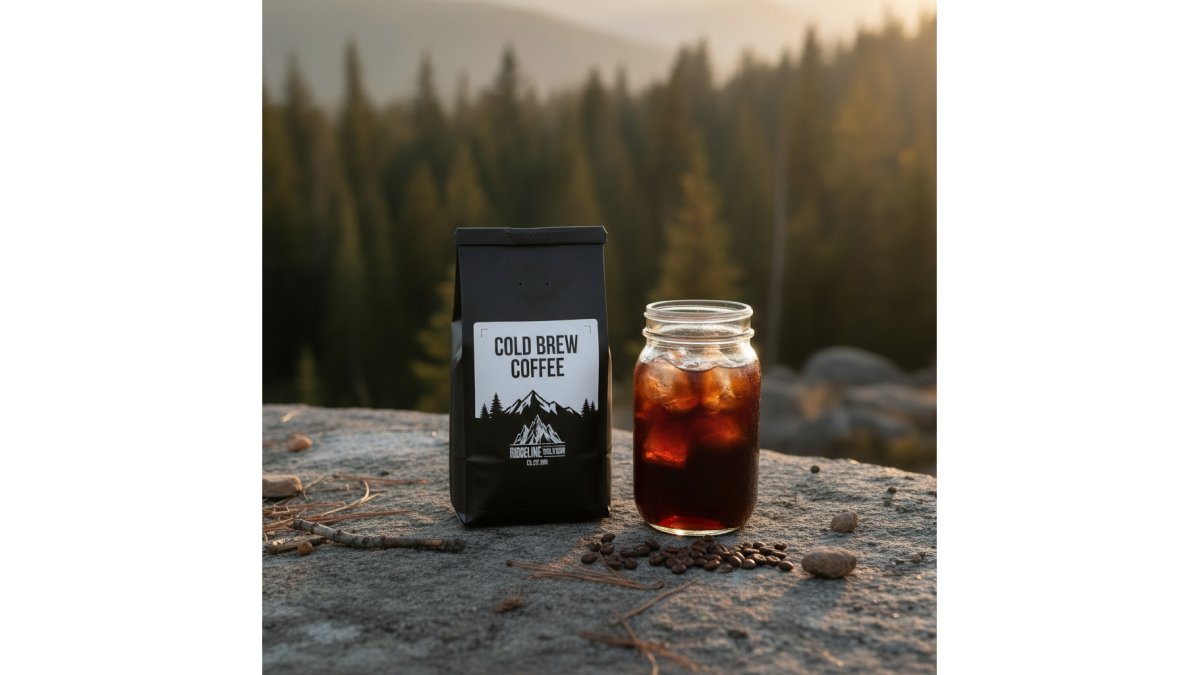
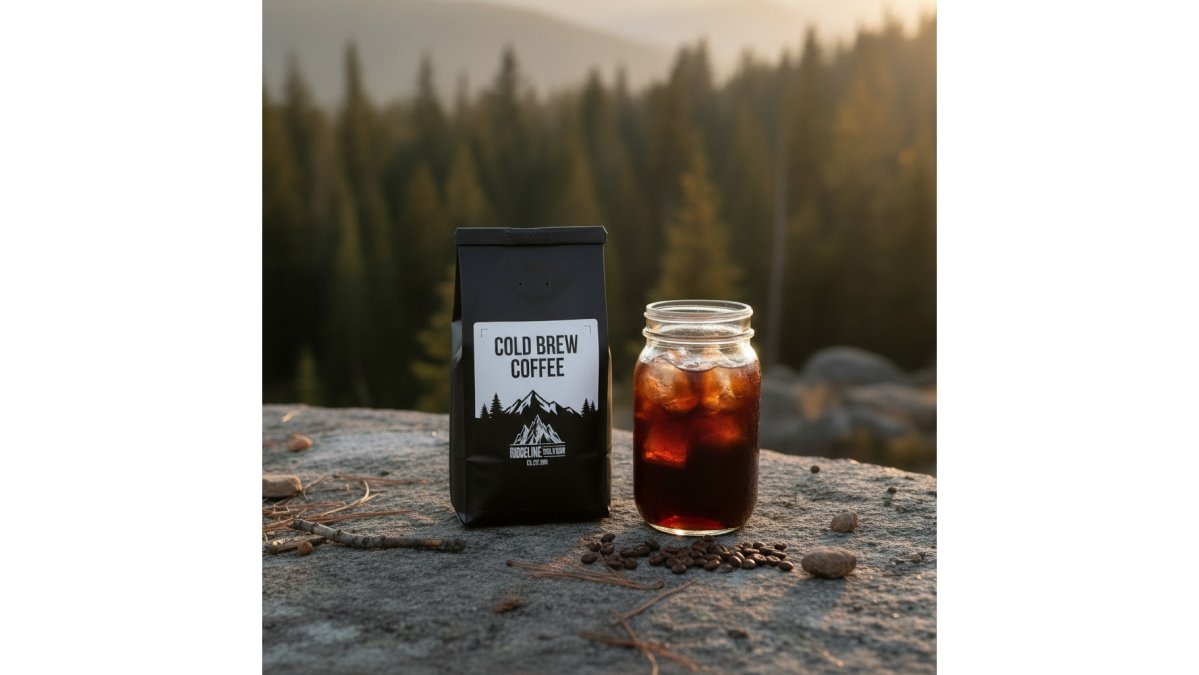
For a starting point, Ridgeline Trail & Coffee's Cold Brew Coffee is a medium blend with chocolate, toffee, and floral tones built for cold brew or nitro. If you want something darker, the Italian Roast is the darkest option in the lineup, a slow-roasted Arabica/Robusta blend.

Single Origin vs. Blended Beans
Blends win for cold brew most of the time. A good coffee blend balances body, sweetness, and acidity so no single note dominates after 16 hours of steeping. Single origin beans give you clarity and a distinct roast profile, but they're less forgiving, a bright, high-acid single origin that tastes vivid as a pour-over can read thin or sharp as cold brew.
If you want to taste one region clearly, a single origin like Sumatra brings syrupy body, dark chocolate, and earthy, dried-fruit notes. That heavy body holds up well in cold extraction. For everyday batches where consistency matters, a blend is the safer pick.
Cold Brew Coffee Grind Size: Why Coarse Wins
Cold brew coffee grind size should be coarse, roughly the texture of sea salt or raw sugar. Coarse grounds let water flow through slowly and evenly, so you extract sweetness and body without pulling out the harsh, bitter compounds that fine grounds release.
A coarse grind is the single most common fix for bitter cold brew. If your batch tastes sharp or muddy, your grind is probably too fine. Pre-ground coffee sold for drip or espresso is almost always too fine for cold brew.
If you're grinding at home, use a burr grinder and aim for visible, distinct particles. If you buy pre-ground, look for a bag labeled for cold brew, since those are ground coarse on purpose. Ridgeline's Cold Brew Coffee is a dark French roast already ground very coarse, so you skip the guesswork.
Cold Brew Coffee Ratio: Dialing In Strength
The standard cold brew coffee ratio is 1:8 by weight, one part coffee to eight parts water, which makes a concentrate you dilute with water or milk. For ready-to-drink cold brew, move toward 1:12 to 1:15.
Weigh your coffee if you can. Volume scoops vary wildly, and a ratio that's off by a third changes the whole batch. A kitchen scale removes the guesswork.
| Style | Coffee to Water | Best For |
|---|---|---|
| Concentrate | 1:8 | Diluting with milk or water |
| Strong ready-to-drink | 1:10 | Iced coffee over ice |
| Mild ready-to-drink | 1:15 | Drinking straight, black |
Start at 1:8, taste after steeping, then adjust. If it's too weak, add coffee next time rather than steeping longer, since longer steeping pulls bitterness before it adds much strength.
How Long to Steep Cold Brew for Best Flavor
How long to steep cold brew depends on grind and ratio, but 16 to 18 hours at room temperature is the sweet spot for most home setups. Below 12 hours the flavor is thin; past 20 hours bitterness and a woody edge creep in.
Steeping in the fridge stretches the window. Cold temperatures slow extraction, so a fridge batch can run 18 to 24 hours and stay smooth. Room-temperature steeping is faster but less forgiving.
A few practical notes from experience:
- Start checking flavor at the 14-hour mark, not the 20-hour mark.
- Stir once after the first hour to make sure all grounds are saturated.
- Strain through a fine mesh or paper filter, then store the concentrate in a sealed jar.
- Concentrate keeps about a week refrigerated; flavor fades after that.
If you want a bean that's forgiving on steep time, a medium blend with steady sweetness gives you more room to work. The House Blend is a medium roast with nutty, sweet chocolate, and mild citrus notes and a clean finish, which holds up across a range of steep times.
Troubleshooting Bitter or Sour Cold Brew
Bitter or sour cold brew almost always traces back to grind, ratio, steep time, water, or the bean itself. Fix the variable and the batch usually corrects on the next try.
Bitter means over-extraction. Your grind is too fine, your steep ran too long, or your ratio had too little water. Coarsen the grind, shorten the steep, or add water. If the bitterness has a dry, chalky edge rather than a clean roast bite, the grind is the first suspect, fine particles keep extracting long after the coarse ones have given up everything they have.
Sour or weak means under-extraction. The grind is too coarse, the steep was too short, or there wasn't enough coffee. Grind finer in small steps, steep longer, or increase the dose. Sourness that tastes like green apple or vinegar usually points to a light roast that never fully developed, not to your method.
Water chemistry is the variable most guides skip entirely. Cold brew is roughly 98 to 99 percent water by weight, so the water is not a neutral carrier, it is an ingredient. Two things matter most:
- Mineral content. Some dissolved minerals, particularly magnesium and calcium, help bind and carry coffee flavor compounds into the cup. Water that is too soft (very low mineral content) tends to produce a flat, hollow-tasting brew, because there is nothing for the flavor compounds to attach to. Water that is very hard can push bitterness and mute sweetness. A middle range, enough minerals to carry flavor, not so many that they dominate, is the target.
- Chlorine and chloramine. Municipal tap water is treated with chlorine or chloramine to keep it safe, and both react with coffee aromatics. The result is a medicinal, band-aid-like off-flavor that no grind or ratio adjustment will fix. A carbon filter removes chlorine readily; chloramine is more stubborn and may need a filter rated for it.
A simple test: brew two identical batches, one with your usual tap water and one with filtered water, and taste them side by side. If the filtered batch tastes cleaner and sweeter, water was your bottleneck. This is a small change that makes a noticeable difference once your grind and ratio are dialed in.
Bean-level causes. If grind, ratio, steep time, and water are all correct and the brew still tastes off, look at the bean. Stale beans taste flat and papery regardless of method. Beans with visible defects.
Conclusion
Getting cold brew right is less about chasing a specific bean and more about matching roast, grind, ratio, and steep time to the cup you want. Nail those and even a simple blend tastes better than most store-bought bottles.
Ridgeline Trail & Coffee blends beans with cold extraction in mind, from the medium Cold Brew Coffee with its chocolate and toffee notes to the coarse-ground Cold Brew Coffee that's ready to steep straight from the bag. Both take the guesswork out of picking a bean. Search the Ridgeline Trail & Coffee collection to find the blend that fits your daily ritual.
Frequently Asked Questions
What coffee beans make the best cold brew?
The best cold brew beans are freshly roasted, coarse-ground, and matched to your taste. Medium roasts deliver chocolatey, nutty, and caramel flavor notes with balanced acidity. Dark roasts like a French or Italian roast bring bittersweet, low-acid cups with heavier body. Avoid beans roasted more than four to six weeks ago, since stale beans flatten out during the long steeping time cold brew requires.
Does roast level matter for cold brew coffee?
Yes. Cold water extracts slowly, so roast profile shapes the final cup more than it does with hot brewing. Medium roasts keep more origin character, including sweetness and mild citrus or floral notes. Dark roasts extract faster and taste bolder, with low acidity and a syrupy mouthfeel. If you drink cold brew black, a medium-dark blend is usually the safest starting point.
What grind size should I use for cold brew at home?
Use a coarse grind, roughly the texture of raw sugar or sea salt. Coarse grounds slow extraction so the brew never turns bitter or muddy, and they rinse clean from a filter or nut milk bag. If your cold brew tastes harsh or cloudy, grind coarser. If it tastes weak after 16 hours, grind slightly finer rather than adding more beans.
How long should I steep cold brew, and what ratio should I use?
Steep at room temperature for 12 to 18 hours, or 18 to 24 hours in the refrigerator for a cleaner, sweeter cup. For cold brew coffee ratio, start with 1 part coffee to 4 parts water by weight for a concentrate you dilute, or 1 to 8 for ready-to-drink strength. A kitchen scale makes both the grind and the ratio repeatable batch after batch.
How does bean origin affect the flavor of cold brew?
Origin sets the base flavor notes before roasting even starts. A Sumatra single origin brings earthy, dark chocolate, and dried fruit tones with a syrupy body that holds up well over ice. Latin American beans lean nutty and cocoa-forward with mild fruity acidity. Blends combine regions for consistency, which is why most dedicated cold brew blends use beans from several origins.