
 listicle
Sustainable Ways to Repurpose Used Coffee Grounds
Table of Contents
- Why Repurposing Used Coffee Grounds Matters
- How to Dry and Store Used Coffee Grounds
- Adding Used Coffee Grounds for Compost
- Coffee Grounds for Plants and Garden Use
- Coffee Grounds for Odor Removal Around Your Home
- Natural Pest Deterrent and Household Cleaning Uses
- DIY Projects and Skincare Applications
- Common Mistakes and Limitations
- Frequently Asked Questions
Last Updated: October 13, 2026
Why Repurposing Used Coffee Grounds Matters
Sustainable ways to repurpose used coffee grounds turn waste into resources for your home and garden. Every cup leaves behind grounds that still contain nutrients, texture, and beneficial compounds, useful for enriching soil, cleaning surfaces, and skincare.
Coffee grounds make up a significant portion of household waste. Repurposing them reduces landfill volume and the resources needed to process that waste, and avoids buying specialized products grounds can handle naturally. At Ridgeline Trail & Coffee, we know active, sustainability-minded customers look for easy eco-friendly wins, and this is one of the simplest.
The practical benefits go beyond the environment: grounds cost nothing, are ready after your morning brew, and work surprisingly well for purposes most people haven't considered.
How to Dry and Store Used Coffee Grounds
To repurpose used coffee grounds effectively, dry and store them properly. Wet grounds spoil quickly and grow mold, making them unusable. Drying is simple but takes patience.
Spread grounds in a single layer on a baking sheet or shallow container in a warm, dry spot, a sunny windowsill, near a heating vent, or an oven on its lowest setting with the door ajar. Stir occasionally.
Store dry grounds in an airtight container away from direct sunlight, a sealed glass jar in a cool pantry, closet, or basement works well. Properly dried grounds stay usable for several months. Discard any that smell musty or show mold.
For composting or immediate garden use, fresh undried grounds are fine, just use them within a few days to avoid decomposition and odor.
Adding Used Coffee Grounds for Compost
Used coffee grounds for compost are among the most straightforward sustainable uses. They break down quickly and add nitrogen, speeding decomposition and creating richer finished compost.
Grounds are "green" material, nitrogen-rich, balancing carbon-heavy "browns" like leaves, straw, and cardboard.
Spread dried or fresh grounds onto the pile in layers with brown materials. Don't dump large quantities at once, add them gradually, alternating with leaves or other brown waste.
In a tightly sealed bin, monitor moisture: fresh grounds add water, so you may need extra browns.
The finished compost enriches soil with organic matter and nutrients. This closed loop, cup to compost to garden, is one of the most sustainable ways to repurpose used coffee grounds.
Coffee Grounds for Plants and Garden Use
Coffee grounds for plants deliver nitrogen and micronutrients directly to soil. They improve soil structure, increase water retention, and support beneficial microbial activity.
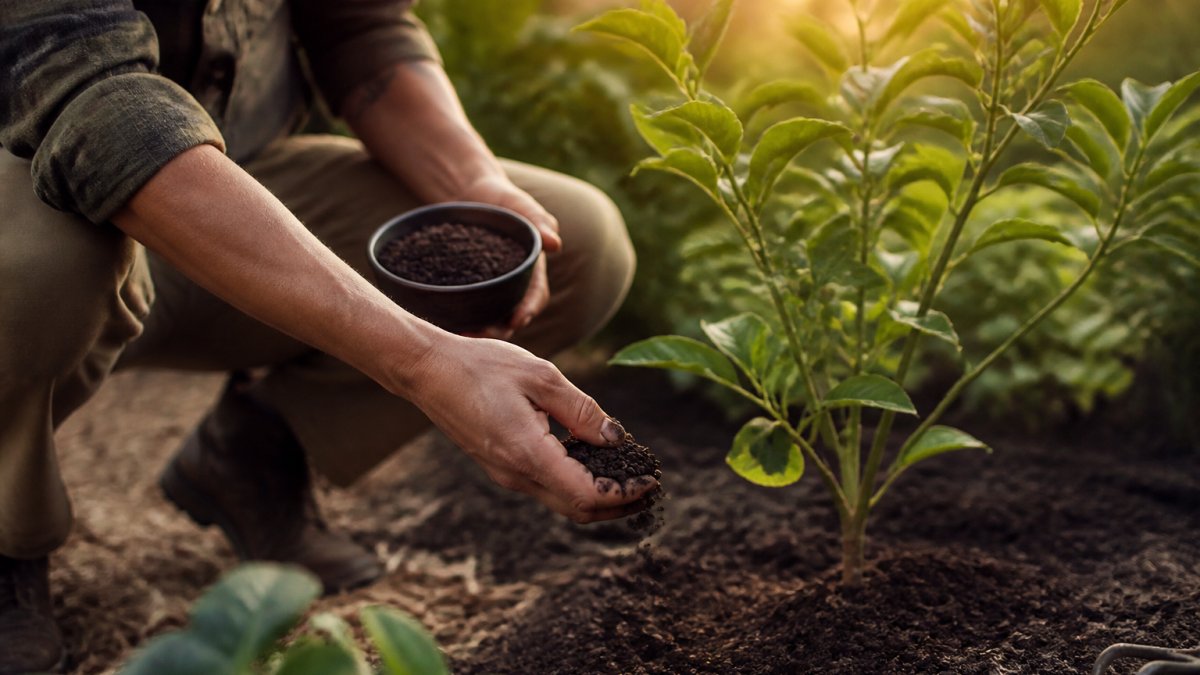
Sprinkle dried grounds around plant bases, working them into the top inch of soil. Most plants tolerate them; acid-lovers like blueberries, azaleas, and rhododendrons benefit most.
For pots, mix dried grounds into potting soil at about 1 part grounds to 10 parts soil for slow nutrient release.
Spread around plants, grounds also work as natural mulch, retaining moisture, suppressing weeds, and breaking down to enrich soil. Refresh every few months during active growing seasons.
Caution: some plants are sensitive to acidity or caffeine.
Coffee Grounds for Odor Removal Around Your Home
Coffee grounds absorb and neutralize odors. Their porous structure traps odor molecules, while their own aroma masks what's left.
Set dried grounds in small containers or breathable pouches wherever odors linger, refrigerators, closets, bathrooms, near trash cans.
For stronger odors, make a sachet: grounds in a small cloth bag or coffee filter tied at the top, hung in closets or tucked into drawers.
In the kitchen, a small dish of grounds on the counter freshens the air naturally, many prefer the coffee aroma to artificial fresheners. Neutralizing bad smells while adding a pleasant one makes grounds a practical household solution.
For stubborn odors in basements or garages, spread grounds on newspaper or cardboard for several days, longer contact means more thorough absorption.
Natural Pest Deterrent and Household Cleaning Uses
Two common claims about used coffee grounds, that they repel pests and clean everything from cast iron to tile, have a kernel of truth and a lot of overstatement. Here's what they actually do and where they fall short.
Pest deterrence: what works and what is folklore
Grounds contain caffeine and diterpenes toxic to some soft-bodied invertebrates at high concentrations, but spent grounds are too dilute for a true repellent effect, what works is mostly physical and short-lived.
- Slugs and snails. A band of dry, coarse grounds around a plant creates an abrasive barrier that many slugs avoid crossing. It works best when the band is at least 2 to 3 inches wide and refreshed after rain or irrigation, because once the grounds are saturated they no longer irritate the foot of the slug. Expect partial control, not elimination. In wet climates, combine grounds with a copper barrier or hand-picking at dusk.
- Ants. Grounds disrupt scent trails when sprinkled across an entry point. Reapply every few days; ants reroute quickly.
- Cats and dogs. Some gardeners report that grounds discourage cats from using a bed as a litter box. The effect is inconsistent and fades as the aroma dissipates.
- What grounds do not do. There is no reliable evidence that spent grounds repel mosquitoes, deer, rabbits, or Japanese beetles. Do not rely on them as a stand-alone pest strategy.
Household cleaning: abrasive, deodorizing, and stain-prone
Dried grounds are a mild abrasive, roughly comparable to a fine scouring powder, and their porous structure traps odor molecules. That combination makes them useful for a narrow set of jobs and a bad idea for others.
Good fits:
- Grimy cookware and grill grates. Mix 2 tablespoons of dry grounds with 1 tablespoon of baking soda and enough water to make a paste. Scrub with a non-scratch pad, then rinse thoroughly. The grit lifts carbonized residue; the baking soda neutralizes grease odors.
- Kitchen sink and cutting boards. Rub a handful of grounds over the surface, rinse, then wash with dish soap. This is a deodorizing step, not a sanitizing one.
- Hands after garlic, onion, or fish. Rub a spoonful of damp grounds between your palms for about 30 seconds, then wash with soap. The grounds adsorb sulfur compounds that soap alone leaves behind.
Bad fits:
- Porcelain, enamel, and light-colored grout. Grounds are dark and slightly oily. They can leave a brown tint in porous surfaces and grout lines that is difficult to remove.
- Anything you would not scrub with an abrasive cleanser. Stainless steel, nonstick coatings, glass cooktops, and acrylic tubs can all be scratched.
- Drains. Do not rinse grounds down the sink. They clump with grease and are a common cause of slow drains. Scrape them into the trash or compost instead.
DIY Projects and Skincare Applications
Coffee grounds show up in homemade scrubs, soaps, and candles because they are free, smell good, and feel like they are doing something. Before you smear them on your face, it helps to understand what they actually do to skin, and when to skip them entirely.
The honest case for coffee scrubs
The exfoliating effect comes from the physical grit of the grounds, not from caffeine or antioxidants. Spent grounds are irregular, jagged particles. On the body, elbows, knees, heels, backs of arms, that grit is fine. On the face, it is often too aggressive. Dermatologists commonly advise against using ground coffee as a facial scrub because the uneven edges can create microtears in the skin barrier, which can worsen redness, irritation, and breakouts.
If you want to use grounds on your face anyway, grind them finer after drying (a spice grinder works) and keep the pressure light.
A body scrub that is worth making
- 1/2 cup fully dried, finely ground spent grounds
- 1/2 cup brown sugar or fine sea salt
- 1/3 cup carrier oil, fractionated coconut, sweet almond, or jojoba
- Optional: 10 drops of an essential oil you have patch-tested
Mix in a jar with a tight lid. Use in the shower on wet skin, massage in circles for 30 seconds, then rinse. Make small batches, the oil can go rancid after a few weeks, and the sugar dissolves if water gets in the jar.
Lip scrub
Use the same ratio but swap the salt for fine sugar and add a drop of vanilla extract. Apply with a clean fingertip, massage for 10 to 15 seconds, and rinse. Do not use it on cracked or bleeding lips.
Candles and crafts
Dried grounds can be stirred into melted soy or beeswax at roughly 1 teaspoon per 4 ounces of wax before pouring. Two caveats: the grounds can clog a wick if you add too many, and they can scorch and smell burnt rather than pleasant. Test a small candle first. Grounds also work as a natural dye for paper and fabric, though the color fades with washing and sun exposure.
Safety and hygiene rules
If your skin is sensitive or you are unsure, a drugstore exfoliant formulated for facial use is a safer choice than a kitchen scrub. Grounds are a reasonable body-scrub ingredient and a good candle additive, they are not a dermatologist-approved facial treatment.
Common Mistakes and Limitations
Knowing what doesn't work with repurposed coffee grounds saves wasted effort.
Another frequent error: using grounds from flavored or treated coffees. Additives and coatings don't break down like plain grounds and may introduce unwanted substances to soil or skincare.
Overusing grounds in garden soil is a common limitation. Excessive amounts create acidic conditions that harm many plants and compact soil, reducing drainage.
In composting, too many grounds without enough browns creates a wet, anaerobic, slow-decomposing pile. Balance is essential, treat grounds as one ingredient, not the foundation.
For skincare, grounds may be too abrasive for sensitive or compromised skin. Anyone with active acne, rosacea, or other conditions should test carefully or consult a professional first.
Finally, repurposing grounds works best as part of a broader sustainability approach, not a complete solution.
Frequently Asked Questions
What are the best sustainable ways to repurpose used coffee grounds?
The most practical methods are adding grounds to compost, using them as a soil amendment for plants, absorbing household odors, and creating natural cleaning scrubs. Each approach requires minimal preparation and fits into existing routines. Composting is ideal if you already maintain a compost pile, while direct application to garden soil works well for those with outdoor space. Drying grounds first extends shelf life and prevents mold, making them easier to store and use on demand.
Can you really use used coffee grounds in compost?
Yes. Used coffee grounds are nitrogen-rich and work as a compost booster, helping break down other organic materials. They balance carbon-heavy items like leaves and cardboard. Grounds add moisture and beneficial microbes that accelerate decomposition. Aim for a mix of roughly one part grounds to four parts other compost materials to avoid compaction. Avoid adding grounds treated with pesticides or bleach, and do not use grounds from flavored coffee that may contain synthetic additives.
How long do dried coffee grounds stay fresh for reuse?
Properly dried and stored grounds remain usable for several months. Store them in an airtight container in a cool, dry place away from direct sunlight. Check occasionally for signs of mold or off odors before use. Grounds stored in damp conditions will develop mold within days, so ensure they are completely dry before sealing containers. For longest shelf life, keep them in a refrigerator or freezer, which also helps preserve any residual aroma for household deodorizing applications.
Are used coffee grounds safe to use on vegetables and edible plants?
Used grounds are generally safe for edible plants when applied properly. They add nitrogen and improve soil structure without chemical residue. Sprinkle grounds directly around plant bases or mix into soil before planting. Avoid piling grounds thickly, as this can create a moisture barrier and promote slugs. Wash vegetables thoroughly before eating, as with any garden produce. If you use grounds from coffee treated with pesticides or bleach, avoid edible plants entirely. Grounds from standard brewed coffee pose no food-safety concern.