 listicle
Best Coffee for Long Fishing Trips: 2026 Guide
Table of Contents
- What Makes Coffee Good for a Long Fishing Trip?
- Quick Comparison: Best Coffee Options for the Water
- 1. Ridgeline Max Caf Blend: Best High Caffeine Coffee for Endurance
- 2. Ridgeline Instant Coffee: The Ultimate Convenience Play
- 3. Portable Coffee Makers for Camping and the Boat
- How to Keep Coffee Hot in a Thermos All Day
- Choosing Your Fishing Trip Coffee Setup
- Frequently Asked Questions
Last Updated: September 5, 2026
A long fishing trip changes your coffee priorities fast. The best coffee for long fishing trips needs to survive hours on the water, deliver steady energy without a crash, and taste good from 6 AM to mid-afternoon. Most anglers learn this the hard way: cold thermos coffee at first light, or nothing at all when the cooler is packed with bait.
The core problem is convenience versus quality. The realistic options are high-caffeine blends, instant coffee that needs only hot water, and portable makers that fit in a tackle box. Below, we'll match each option to your trip length, gear, and caffeine needs.

What Makes Coffee Good for a Long Fishing Trip?
The best coffee for long fishing trips balances three factors: caffeine delivery, brewing simplicity, and heat retention. A blend that tastes great at home can fail on the water if it requires equipment you won't want to clean at dusk. Similarly, high caffeine content matters less if the coffee goes cold by the time the fish start biting.
Caffeine content is the first filter. Long days demand sustained alertness, and a standard light roast may not deliver the kick you need by hour six. Many anglers choose blends with robusta beans for the higher caffeine punch, though robusta can taste harsher than arabica, so a skilled blend balancing both is worth seeking out.
Brewing simplicity is the second filter. On a boat, every piece of gear competes for space with rods, tackle, and coolers. A setup requiring a pour-over kettle, scale, and grinder is impractical. The winning options need only hot water or a single compact device.
But 'time-efficient' is a vague term. The table below breaks down the real-world 'time-to-cup' for the most common portable methods, from the moment you decide you want coffee to the moment it's ready to drink.
| Brewing Method | Setup & Grind Time | Active Brew Time | Steep/Extraction Time | Total Time-to-Cup | Cleanup Effort |
|---|---|---|---|---|---|
| Instant Coffee | 0 min (pre-ground) | 0 min | 0 min | 30 seconds | None |
| Pour-Over Dripper | 2 min (if pre-ground) | 1 min (pour) | 2-3 min (drip) | 5-6 minutes | Low (discard filter) |
| Collapsible French Press | 2 min (if pre-ground) | 1 min (pour) | 4 min (steep) | 7 minutes | Medium (rinse) |
| Manual Espresso Maker | 2 min (if pre-ground) | 1 min (pump) | 0 min | 3-4 minutes | High (disassemble & rinse) |
| Percolator (on stove) | 2 min (if pre-ground) | 1 min (fill) | 7-10 min (perk) | 10-13 minutes | Medium (rinse) |
This comparison reveals a critical insight: time-to-cup is about the total process. While a manual espresso maker has fast extraction, its cleanup is a deterrent on a moving boat, and a pour-over takes longer but cleanup is trivial. If a method requires more than a minute of active attention or cleanup, it's likely to be abandoned after the first day, which is why instant coffee and pre-heated thermoses remain the most reliable choices.
This focus on efficiency also highlights a key difference from home brewing: temperature control. On a boat, you're at the mercy of your stove or kettle, and a rolling boil is often the only option, which can over-extract delicate beans and lead to bitterness. A robust, forgiving dark or medium-dark roast is often a better choice for the water than a delicate, single-origin light roast.
Quick Comparison: Best Coffee Options for the Water
| Option | Brew Time | Gear Needed | Best For | Caffeine Level |
|---|---|---|---|---|
| High-caffeine ground blend | 4-5 min | Portable dripper or French press | Anglers who want full flavor with a kick | High |
| Instant coffee | 30 seconds | Hot water and a mug | Kayak trips and minimal packing | Moderate to high |
| Portable espresso maker | 3-4 min | Manual pressure device | Serious coffee drinkers with deck space | High |
| Pre-made cold brew concentrate | 1 minute | Water or milk | Hot afternoons and quick refills | High |
If you're packing for a multi-day trip with a cooler and a camp stove, ground coffee with a portable maker gives the best flavor-to-effort ratio. If you're in a kayak or wading a river, instant coffee wins because it weighs almost nothing and needs no cleanup.
1. Ridgeline Max Caf Blend: Best High Caffeine Coffee for Endurance
For anglers who need maximum alertness from first light to last cast, the Max Caf Blend is our top pick. This high caffeine blend combines coffee from Tanzania and India Robusta, delivering a serious energy boost without the bitter edge that pure robusta coffees often carry.
What sets this blend apart is how it handles the endurance problem. Many high-caffeine coffees give you a spike followed by a crash, the last thing you want when watching a bobber for hours. The robusta content provides a steadier caffeine release, while the arabica components keep the flavor drinkable.
The one limitation is that this is a ground blend, not instant. You'll need a brewing method, whether a portable dripper, French press, or camp stove percolator. For those who want zero equipment, the instant option below is the better fit.
2. Ridgeline Instant Coffee: The Ultimate Convenience Play
The Instant Coffee pouch is the best coffee for long fishing trips when simplicity trumps everything else. Each resealable pouch contains 30 servings and costs $24.99, well under a dollar per cup. You add hot water, stir, and you're done, no filter, no press, no cleanup.
This is the option that disappears into your gear and saves you when you need it most. Stash it in a dry bag, glove box, or tackle compartment, and it's always there. The resealable pouch keeps the coffee fresh between trips, which matters more than you'd think after a month in storage.
The tradeoff is flavor depth. Instant coffee has improved dramatically in recent years, but it still can't match the complexity of freshly brewed grounds. If you just want hot caffeine without thinking about it, this is the clear winner.
3. Portable Coffee Makers for Camping and the Boat
Portable coffee makers for camping and boat use fill the gap between instant convenience and full home brewing. The right one depends on your space and your patience: these devices require more effort than instant coffee but can deliver a noticeably better cup.
The most popular styles include manual pour-over drippers, collapsible silicone French presses, and hand-pumped espresso makers. Pour-over drippers are light, but require a steady hand and a separate filter. French presses are forgiving and can produce a fuller body, but need rinsing between batches. Espresso makers can deliver concentrated coffee, but may take practice and muscle to operate.
| Maker Type | Weight | Brew Time | Cleanup Effort | Cup Quality |
|---|---|---|---|---|
| Pour-over dripper | Very light | 3-4 min | Low | Clean, bright |
| Collapsible French press | Light | 4-5 min | Medium | Full-bodied |
| Manual espresso maker | Heavy | 4-5 min | High | Intense, concentrated |
For most anglers, a collapsible French press can be a good balance. It packs flat when empty and tolerates rough handling. The Cowboy Blend, with its dark and medium roast combination and cocoa, caramel, and vanilla tones, can brew well in a French press because full-immersion can extract those deeper flavors.

How to Keep Coffee Hot in a Thermos All Day
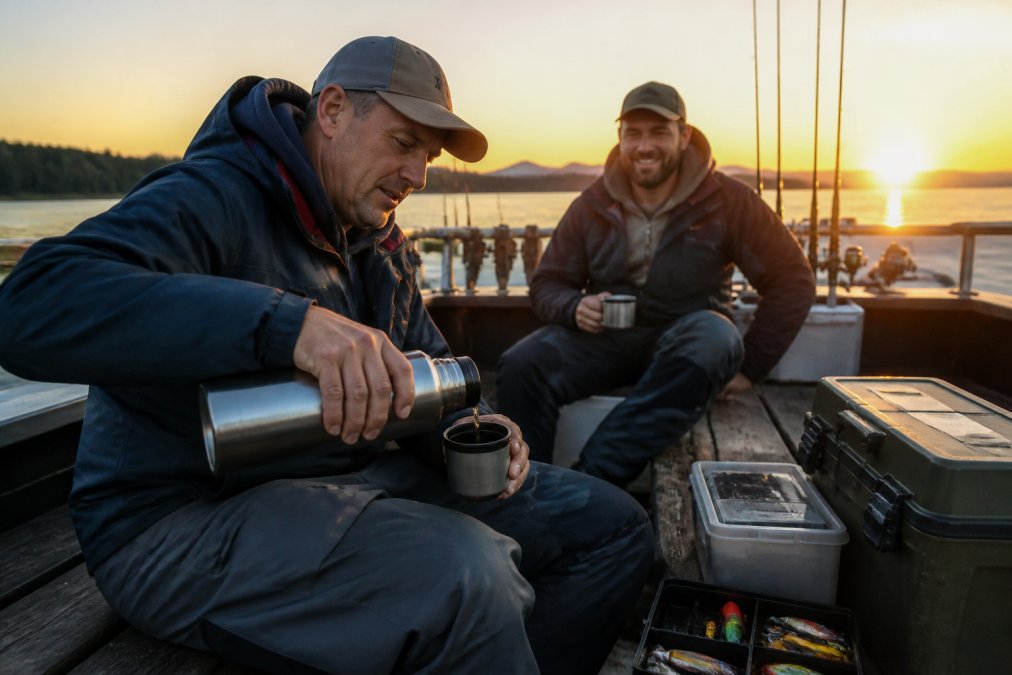
Keeping coffee hot in a thermos all day is a matter of preparation, not magic. The biggest mistake anglers make is pouring hot coffee into a cold thermos and wondering why it's lukewarm by noon, a thermos sitting in a cool boat cabin has cold walls that steal heat from the first pour.
The fix is to preheat the thermos. Fill it with boiling water, cap it, and let it sit for five minutes before adding your coffee. This warms the interior walls so they don't draw heat out of your brew, extending your coffee's hot window by hours.
- Preheat the thermos with boiling water for 5 minutes, then empty it
- Brew your coffee extra strong, since heat loss dulls flavor over time
- Fill the thermos to the very top to minimize air space, which carries heat away
- Avoid opening the lid except when pouring; every open costs heat
A high-quality thermos is a worthwhile investment if you're serious about all-day coffee. Vacuum-insulated models with wide mouths are easier to fill and clean than narrow-necked versions. Consumer Reports' guide to insulated drinkware notes that vacuum insulation is the key factor in heat retention, so check that spec before you buy.
Beyond heat retention, the real challenge is managing your coffee consumption to avoid the dreaded afternoon crash. A thermos full of high-caffeine coffee can be a trap: you sip it all morning, get a massive initial spike, and then face a significant energy dip just as the afternoon bite picks up.
Here is a practical strategy for pacing your thermos to align with a full day on the water:
- Start with a Smaller Thermos: Instead of one massive 64-ounce thermos, bring two smaller 24-ounce thermoses. This lets you control your intake and keep the second thermos sealed and hot until you're ready for it.
- The 'Half-and-Half' Method: Fill your thermos halfway with your high-caffeine Max Caf Blend or Breakfast Blend + coffee, then top it off with hot water. This dilutes the caffeine per ounce, allowing you to sip over a longer period without overloading your system.
- Plan for a 'Second Act': If you're out for more than 6 hours, plan a second, smaller coffee break in the early afternoon. Use a separate small thermos or a pouch of Instant Coffee to make a fresh, hot cup. This provides a boost that lukewarm coffee can't match.
- Know Your Caffeine Half-Life: Caffeine has a half-life of roughly 5-6 hours. If you have a large dose at 6 AM, a significant portion is still in your system at noon. This can lead to jitters and anxiety. Pacing your intake with the half-and-half method helps you maintain a more consistent level of alertness without the negative side effects.
By thinking of your thermos as a system for managing caffeine intake, you can turn it into a strategic tool for endurance, a hot, flavorful cup available when you need it, at the right strength, without the crash.

Choosing Your Fishing Trip Coffee Setup
Choosing your fishing trip coffee setup comes down to one honest question: how much gear are you willing to carry and clean? There is no universal best coffee for long fishing trips, only the best option for your routine.
For day trips where you're back at the truck by evening, a preheated thermos filled with strong Breakfast Blend + coffee is the simplest winning setup. That medium roast includes robusta for extra caffeine, handling the morning-to-noon stretch without a second brew. For overnight or multi-day trips with a camp stove, add a portable French press and a bag of ground coffee for fresh cups at camp.
For kayak trips, wade fishing, or any scenario where every ounce counts, the instant coffee pouch is the rational choice. It takes up less space than a thermos and weighs a fraction of what ground coffee and a maker weigh.
Water temperature and ratio are variables that can affect cup quality. On the water, you won't have precise control over either, so choosing a blend that tastes good across a range of conditions can be helpful. A forgiving medium or medium-dark roast can handle imperfect brewing better than a delicate light roast.
The final consideration is caffeine sensitivity. If you're prone to morning anxiety or stomach issues on an empty stomach, a high-caffeine robusta blend first thing might not serve you well. Start with a regular breakfast blend and switch to the high-caffeine option only if you feel yourself fading mid-day.
Long fishing trips demand coffee that keeps pace with the day, from pre-dawn launches to the slow afternoon hours. The right setup balances caffeine needs, brewing effort, and heat retention, and it looks different for every angler. Ridgeline Company offers the two ends of that spectrum: the Max Caf Blend for endurance and the Instant Coffee pouch for pure convenience. Both deliver specialty-grade flavor in formats built for the outdoors. Explore the [Ridgeline coffee collection(https://ridgelineco.co) and find the blend that matches your next trip.
Frequently Asked Questions
What is the best way to keep coffee hot while fishing?
Preheat your thermos with boiling water for 5 minutes before adding coffee. Fill it to the brim to minimize air space, which speeds up cooling. A high-quality insulated thermos can keep coffee hot for 12+ hours. For all-day trips, skip opening the lid frequently and pour into a separate mug instead. This method keeps your main supply hot for the second half of the day.
How much caffeine do I need for a full day of fishing?
Most anglers need 200-400mg of caffeine spread across a 10-12 hour day. That equals roughly 2-4 cups of standard coffee. A high-caffeine blend like Ridgeline's Max Caf, made with Tanzania and India Robusta beans, packs more punch per cup, meaning you can carry less volume. Start with a strong cup at launch, then switch to a thermos with a medium roast for steady, sustained energy without the jitters.
Is instant coffee or ground coffee better for fishing trips?
Instant coffee wins for most fishing scenarios. It takes up minimal space, weighs almost nothing, and needs no brewing equipment beyond a heat source and a cup. Ground coffee delivers better flavor and complexity but requires a portable maker, filters, and more cleanup. For a quick morning start on the boat, instant is the practical choice. For a longer shore camp where you have time, a portable pour-over with fresh grounds is worth the hassle.
What is the best high caffeine coffee for endurance?
The best high caffeine coffee for endurance is one that delivers a strong caffeine dose without wrecking your stomach. Look for blends that include Robusta beans, which contain about double the caffeine of Arabica. Ridgeline's Max Caf Blend combines Tanzania and India Robusta for a serious energy boost. Pair it with a solid breakfast to avoid the jittery feeling that comes with caffeine on an empty stomach.
How do I store coffee beans to keep them fresh on a boat?
Keep beans in an airtight, opaque container away from direct sunlight and moisture. On a boat, humidity is your biggest enemy. Portion out what you need for the trip into a sealed bag or jar. Whole beans stay fresh longer than pre-ground coffee, so grind only what you need each morning. For multi-day trips, consider vacuum-sealed packs or single-serve capsules that protect against oxygen and moisture.