 ultimate-guide
Is Specialty Coffee Worth the Cost? An Honest Look
Table of Contents
- What Defines Specialty Coffee Versus Commodity Coffee
- The Real Price Difference: Cost Per Cup Breakdown
- Does Specialty Coffee Actually Taste Better?
- The Diminishing Returns Curve of Expensive Coffee
- How to Brew Specialty Coffee at Home Without Extra Gear
- Why Single Origin Coffees Cost More and When They're Worth It
- Finding the Best Coffee for Busy Mornings That Fits Your Budget
- The Verdict: When to Spend More and When to Save
- Frequently Asked Questions
Last Updated: September 8, 2026
What Defines Specialty Coffee Versus Commodity Coffee
Specialty coffee scores 80 points or higher on the Specialty Coffee Association's 100-point cupping scale, evaluated by certified Q graders. Commodity coffee is the mass-market product traded on global exchanges, often blended to mask defects and roasted dark to hide inconsistencies. The gap starts at the farm level: specialty grade beans typically come from single origins at higher altitudes, picked ripe and processed with care, while commodity beans are often machine-harvested and sun-dried without much quality control.
Specialty roasters often buy through direct trade relationships, paying above fair trade minimums in exchange for traceability and quality. That transparency costs money, but it also means the person growing your coffee can earn a living from it.
The Real Price Difference: Cost Per Cup Breakdown
The most honest way to evaluate whether specialty coffee worth its price tag is to calculate cost per cup. A typical 12-ounce bag of specialty coffee holds roughly 25 to 30 cups, which puts a $25 bag at about $0.85 to $1.00 per cup. A can of commodity ground coffee at $10 produces the same number of cups for roughly $0.35 each.
That difference works out to around $15 to $20 per month for a single daily drinker, or roughly $180 to $240 per year. For that premium, you are paying for higher bean density, better processing methods like washed or natural processes, and a roast date measured in days rather than months.
Does Specialty Coffee Actually Taste Better?
Yes, but not in the way most people expect. The difference is not that specialty coffee tastes "stronger" or more intense. It is that specialty coffee tastes cleaner and more complex, with identifiable flavor notes that survive the roasting process instead of being burned away.
The Specialty Coffee Association publishes formal cupping protocols that measure attributes like acidity, body, and aftertaste that genuinely differ between specialty and commodity lots. If you are used to dark roasts from the grocery store, a light or medium single origin may actually taste weaker at first because it has less bitterness and more perceived acidity.

The catch is that brewing variables matter enormously. The same specialty beans brewed badly with inconsistent grind and stale water will taste worse than a commodity blend brewed perfectly. Specialty coffee is not a guarantee of a better cup; it is a ceiling only reached if your brewing equipment and technique are up to the task.
The Diminishing Returns Curve of Expensive Coffee
Here is the part most coffee guides skip: the relationship between price and taste is not linear. Moving from a $10 bag of commodity coffee to a $25 specialty bag produces a dramatic improvement in cup quality. Moving from a $25 bag to a $45 microlot single origin produces a much smaller improvement that many drinkers cannot detect.
The Specialty Coffee Association's cupping standards reflect this reality. A coffee scoring 84 points is meaningfully better than one scoring 78. But the gap between an 86 and an 89 point coffee is subtle enough that even experienced tasters debate it. The Specialty Coffee Association's cupping protocol documentation describes this scoring range in detail, and the practical takeaway is simple: the biggest quality jump happens at the entry level of specialty, not at the top.
How to Brew Specialty Coffee at Home Without Extra Gear
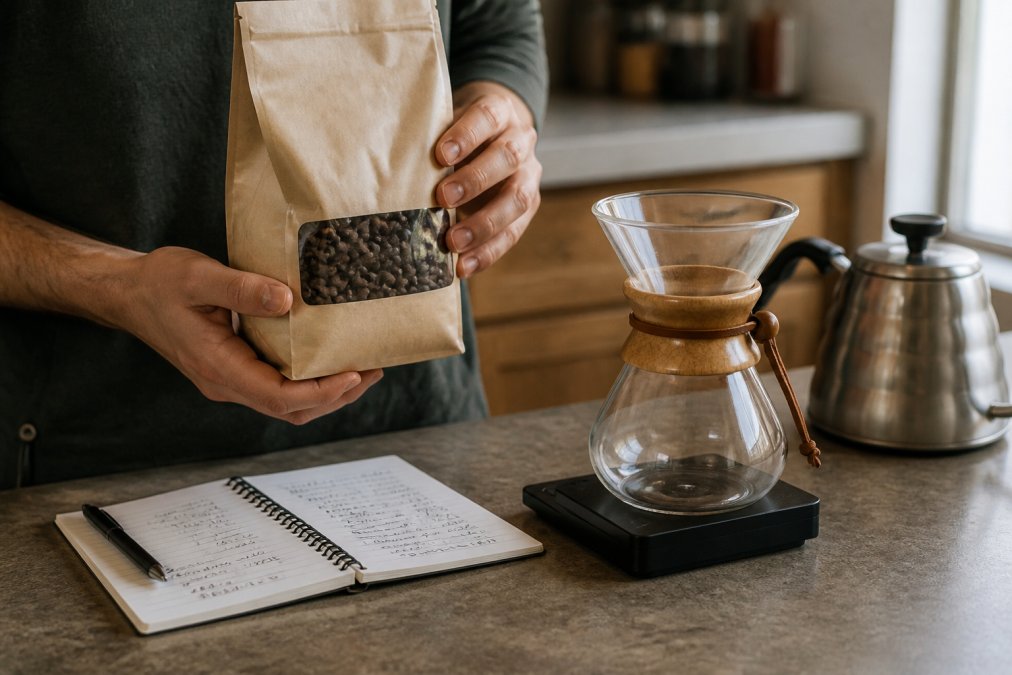
Brewing specialty coffee at home doesn't require a commercial setup, but it does require controlling three variables that objectively determine extraction quality: water chemistry, grind particle size distribution, and the coffee-to-water ratio. Most home brewers overlook the first one entirely, which is why a $25 bag of beans can taste flat and hollow.
Water chemistry is the silent killer of specialty coffee. The Specialty Coffee Association specifies a target of 150 parts per million (ppm) total dissolved solids, with a pH between 6.5 and 7.5. Tap water in many U.S. municipalities is either too hard (above 250 ppm) or too soft (below 50 ppm), both of which suppress the soluble flavor compounds that make specialty coffee distinct. If your tap water has a strong chlorine smell or leaves scale in your kettle, the minerals are actively binding to the coffee's acids and preventing extraction. A simple countertop filter pitcher that reduces hardness to the 100-150 ppm range costs less than a bag of beans and will produce a measurably cleaner cup.
Grind consistency matters more than grind fineness. A blade grinder shatters beans into a wide range of particle sizes, from dust to boulders. The fine dust over-extracts and turns bitter, while the boulders under-extract and turn sour. A basic burr grinder, even a hand-cranked model, produces a narrower particle size distribution, which means the water extracts the bean evenly. If you are not willing to grind whole beans, specialty coffee is likely not worth the cost, because pre-ground coffee loses its volatile aromatic compounds within 15 minutes of grinding.
The 1:16 ratio is a starting point, not a rule. The golden ratio of 60 grams of coffee per liter of water is a baseline, but the ideal ratio depends on the roast level and the bean density. Light roasts are denser and require a slightly finer grind and a longer contact time to extract fully. Dark roasts are more porous and extract quickly, so they need a coarser grind to avoid bitterness. A $15 kitchen scale that measures grams is the single highest-ROI purchase you can make.
The freshness window is shorter than you think. Specialty coffee is at its peak between 4 and 14 days after the roast date. Before day 4, the beans are still off-gassing carbon dioxide, which repels water and causes uneven extraction. After day 14, the volatile aromatic compounds that carry flavor notes like blueberry or chocolate begin to oxidize and flatten. A 12-ounce bag consumed within 14 days yields about 25 cups of peak flavor. The same bag stretched over 30 days yields 25 cups, but the last 10 cups will taste closer to commodity coffee. If you cannot finish a bag within two weeks, buy a smaller bag or a sample pack, even if the cost per ounce is higher.
A common pattern among home brewers is to blame the beans when the real culprit is the water or the grind. Before you abandon specialty coffee, test your water hardness and upgrade your grinder. These two variables account for more of the final cup quality than the difference between an 84-point and an 88-point coffee.
Why Single Origin Coffees Cost More and When They're Worth It
Single origin coffees cost more because the economics of their production are fundamentally different from commodity blends. A commodity coffee is a blend of beans from dozens or hundreds of farms, which allows buyers to average out defects and negotiate the lowest possible price per pound on the global C-market. A single origin coffee, by contrast, is a lot from one farm or one cooperative, and that lot must stand on its own quality. If that lot has a defect, the roaster cannot hide it by blending. This risk is priced into the contract.
The price difference is not arbitrary. A coffee farmer growing at 1,600 meters in the Huila region of Colombia faces a longer maturation period for the cherry, which increases the risk of disease and requires more careful picking. The harvest is typically done by hand, and a skilled picker can only collect about 100 to 150 pounds of cherry per day, which yields just 20 to 30 pounds of green coffee. The farmer must also invest in processing infrastructure, such as raised drying beds or mechanical demucilagers, to achieve the clean, bright cup profile that specialty buyers demand. These costs are reflected in the farm-gate price, which for specialty grade coffee is often two to three times the commodity C-market price.
The diminishing returns curve applies to origins as well as price points. A coffee from a well-known region like Yirgacheffe, Ethiopia, will cost more than a commodity blend, but it will also deliver a dramatically different and more complex cup. However, within the single origin category, the price ladder is steep. A $30 bag of a washed Yirgacheffe from a cooperative is a meaningful step up from a $20 bag of a Brazilian natural. But a $60 bag of a microlot from a single farm in the same region is not twice as good as the $30 bag. It might be 10 to 15 percent better, and only to a palate trained to detect subtle differences in acidity and finish.
The value of single origin is in the information, not just the flavor. When you buy a single origin coffee, you are paying for traceability. You know the altitude, the varietal, the processing method, and often the name of the farmer. This information allows you to build a mental map of flavor profiles: you learn that a natural-processed coffee from the Sidama zone of Ethiopia tends to have strawberry and wine-like notes, while a washed coffee from the same zone is more tea-like and floral. This learning is a form of value that a commodity blend cannot provide.
When is a single origin not worth it? If you drink coffee with milk and sugar, or if you brew it in a machine that does not control water temperature, the subtle terroir notes that justify the premium will be masked. A single origin coffee is also a poor choice for a daily driver if you are not paying attention to the roast date, because the flavor profile degrades faster than a blend. Blends are designed for consistency; they are engineered to taste the same from batch to batch, which makes them forgiving for high-volume brewing.
For those who want to explore the range of single origin flavors without committing to a full bag, a sample pack that includes multiple origins is the most economical way to build your palate. Tasting a washed Ethiopian next to a natural Brazilian in the same week will teach you more about terroir than reading any number of tasting notes.

Finding the Best Coffee for Busy Mornings That Fits Your Budget
The best coffee for busy mornings is the one that requires the least decision-making while still tasting good. That means a consistent blend, ground appropriately for your brewer, with a roast profile that stands up to milk or sweetener if that is how you take it. Chasing single origin variety at 6 a.m. is a recipe for disappointment.
For most people, a medium roast house blend offers the best balance of flavor and forgiveness. Medium roasts preserve more origin character than dark roasts while brewing more predictably than light roasts, which can taste sour if under-extracted. A blend also smooths out seasonal variation, so your cup tastes the same in January as it does in July.
The Coffee Quality Institute's sustainability research highlights that buying from roasters who pay above commodity rates supports better farming practices, so your morning routine can align with sustainability goals without extra effort.
The Verdict: When to Spend More and When to Save
Specialty coffee worth the splurge is defined by drinking it black, caring about flavor, and investing minimal brewing effort. If you add heavy cream and sugar, or if you brew with a machine that does not control water temperature, the premium will be wasted. Be honest about your habits before you spend.
Spend more when you want to explore single origins, support direct trade relationships, or treat yourself on weekends. Save money by using a solid house blend for daily drinking. Sample packs are a smart way to find what you like without committing to a full bag.
Our Best Sellers Sample Pack lets you test six different roasts in 2-ounce portions before committing to a full bag. For those who want to explore growing regions, the Single Origin Favorites Sample Pack covers Brazil and other distinctive origins.
Frequently Asked Questions
Is specialty coffee worth the cost for everyday brewing?
For most daily drinkers, yes, if you're currently buying mid-tier supermarket coffee. Specialty coffee costs roughly $1 to $1.50 more per cup than commodity options, but the flavor difference is significant. The key is buying whole beans and grinding right before brewing. If you drink two cups a day, the added cost is about $60 to $90 per month. Start with a sample pack to test different roasts before committing to a full bag.
Is single origin coffee better than a blend?
Neither is inherently better. Single origin coffees come from one farm or region and show distinct flavor notes tied to that location's altitude, soil, and processing method. Blends combine beans to create a balanced, consistent cup. For black coffee drinkers who want to explore flavor variety, single origins are worth trying. If you add milk or sugar, a well-crafted blend often delivers more value for the price.
How can I tell if a coffee bag is truly specialty grade?
Look for a roast date on the bag rather than just a best-by date. Specialty roasters typically print the roast date because freshness matters. The bag should also name the origin, farm or cooperative, and often the processing method. A cupping score of 80 or above on the Specialty Coffee Association scale qualifies as specialty grade. If the bag only says '100% Arabica' with no origin details, it likely isn't specialty.
Why is single origin more expensive than blended coffee?
Single origin coffees come from one specific farm or region, and those lots are often smaller and higher quality. Farmers who produce these beans usually use more careful picking and processing methods, which raises labor costs. Many roasters also buy through direct trade relationships, paying above commodity prices to support quality. You're paying for traceability and a distinct flavor profile that mass-produced blends cannot offer.
Deciding whether specialty coffee is worth the cost comes down to your brewing habits and your palate. If you drink coffee black and brew it fresh, the jump from commodity to specialty is the single biggest improvement you can make to your daily cup, costing only about a dollar per day. Ridgeline Trail & Coffee offers sample packs and single origin options that let you test the difference without guessing. Explore our coffee collection and find a roast that fits your routine.