
 how-to
Maintaining Waterproof Ski Shell Jackets: A Complete Care Guide
Last Updated: November 1, 2026
Quick Summary
Maintaining a waterproof ski shell means washing it with a technical cleaner on a gentle cycle, then tumble drying on low heat to reactivate the DWR finish. Wash first and test with a light spray of water; only reproof with spray-on or wash-in treatment when water stops beading.
- Use a technical cleaner, never ordinary detergent, fabric softener, or products with softeners and brighteners.
- Wash one shell at a time on a gentle cycle with warm water and an extra rinse.
- Tumble dry on low for about 20 minutes to reactivate the DWR coating.
- Choose spray-on treatment for lined or insulated shells and wash-in for unlined single-layer shells.
- Store the shell clean and dry on a wide hanger, away from sealed plastic bags and heat.
Table of Contents
- Why Your Waterproof Ski Shell Needs Regular Care
- How to Wash a Ski Jacket Without Damaging the Membrane
- How to Dry a Ski Shell Jacket for Maximum Water Repellency
- How to Re-Waterproof a Ski Jacket: Spray-On vs. Wash-In Treatments
- How Often to Reproof a Waterproof Jacket
- Troubleshooting: DWR Failure vs. Membrane Damage
- Storing Your Ski Shell Between Seasons
- Shop Ridgeline Trail & Coffee for Your Next Adventure
- Frequently Asked Questions
Why Your Waterproof Ski Shell Needs Regular Care
Maintaining waterproof ski shell jackets is simpler than most skiers expect. A waterproof ski shell is a technical fabric layer that blocks wind and moisture while letting sweat vapor escape.
Dirt is the quiet enemy here. Body oils, sunscreen, and trail grime clog the fabric's pores. Water then stops beading and starts soaking in, a problem called wetting out.
The good news? Most "failed" jackets just need a wash.
Here's what we'll cover: how to wash a ski jacket, how to dry a ski shell jacket, and how to re-waterproof a ski jacket when the finish wears thin.
How to Wash a Ski Jacket Without Damaging the Membrane
Washing a ski jacket by hand or machine is safe when you follow the care label and skip harsh products. The membrane is delicate, but it tolerates a gentle cycle far better than a year of trapped oils. The difference between a shell that comes out clean and one that comes out damaged is almost always the five minutes of prep before the drum closes.
Preparing the Jacket Before Washing
Work through this checklist in order. Each item prevents a specific failure mode.
Pockets and liners
- Empty every pocket, then run your hand along the seams to catch receipts, lip balm, and lift tickets
- Turn pockets inside out and shake out grit, sand and salt crystals abrade the membrane from the inside
- Remove any removable liners, hoods, or powder skirts the care label lists as separate items
Zippers
- Close the main zipper, pit zips, and pocket zippers fully
- Why: open teeth are sharp and can snag the face fabric or the drum, and a closed zipper keeps the tape from stretching
- Check for grit in the slider track and brush it out with a soft toothbrush
Hook-and-loop and flaps
- Fasten all hook-and-loop cuffs, storm flaps, and pocket covers
- Why: loose hook tape is the single most common cause of pilling and snags on technical fabric
Hood and drawcords
- Release the hood drawcords so the hood lies flat
- Unclip any hood-to-collar attachment and lay the hood open
- Why: a bunched hood traps detergent and holds water in the drum
Seams and surface
- Brush loose dirt off the cuffs, hem, and collar with a soft brush
- Inspect seam tape at the shoulders, hood, and pocket corners for peeling before washing, water and agitation can lift tape that is already failing
- Pre-treat greasy collar and cuff stains with a small amount of technical cleaner, working it in with your fingers and letting it sit five minutes
Skip this step and small items can bang around the drum. Zipper teeth can also snag the fabric, and a loose hood can wad up and hold residue against the membrane.
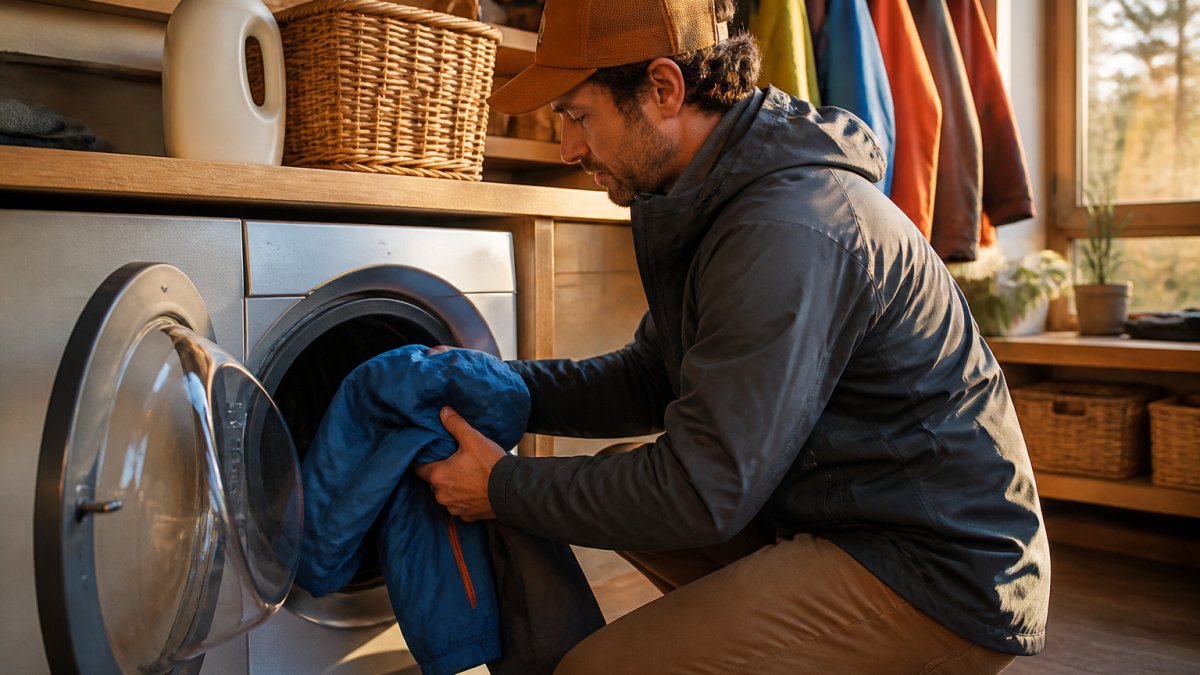
Choosing a Technical Cleaner and Machine Settings
Use a technical cleaner made for waterproof shells. Ordinary detergent can leave residue that attracts water and can strip the DWR coating. Fabric softener coats the fabric and reduces water repellency. Look for a cleaner labeled for waterproof or technical fabrics, and avoid anything with added softeners, brighteners, or scent boosters.
Set your machine like this:
| Setting | What to Choose | Why It Matters |
|---|---|---|
| Cycle | Gentle or delicate | Protects seams and membrane from agitation |
| Water temp | Warm, per care label | Dissolves oils without stressing fabric |
| Extra rinse | On | Flushes out detergent residue that attracts water |
| Spin | Low | Avoids creasing the membrane |
| Load size | One shell at a time | A crowded drum means poor rinsing |
Wash one shell at a time, since a crowded drum can mean poor rinsing.
Rinsing Out Detergent Residue
Residue is the most common reason a freshly washed shell still wets out. After the main cycle, run a second rinse with no detergent. If the water in the drum still looks cloudy or feels slippery, run one more. On a top-loading machine, choose the highest water level for the rinse so the shell floats free rather than sitting against the agitator.
How to Dry a Ski Shell Jacket for Maximum Water Repellency
Tumble drying on low heat can help restore water repellency on many shells, as heat can reactivate the DWR coating. Always confirm the care label allows machine drying first.
Here's the sequence:
- Run an extra rinse cycle if you suspect leftover detergent
- Tumble dry on low heat for about 20 minutes
- Check the fabric while it's still slightly warm
- Repeat in short bursts until water beads on the surface
If the label says no dryer, hang the shell in a warm, dry room away from direct sun. Never dry clean a technical shell unless the label explicitly allows it.
How to Re-Waterproof a Ski Jacket: Spray-On vs. Wash-In Treatments
Re-waterproofing restores the DWR layer, not the membrane itself. Two product types do the job, and the right pick depends on your jacket's construction, not on which bottle is on sale.
Spray-On vs. Wash-In: How to Choose
| Factor | Spray-On | Wash-In |
|---|---|---|
| Best for | Insulated shells, lined shells, mixed materials, jackets with hoods and cuffs that need targeted coverage | Unlined, single-layer shells |
| Coverage | You control where it lands, good for high-wear zones | Treats the whole garment evenly, including the inside face |
| Breathability impact | Minimal, because the inside face stays untreated | Can reduce breathability slightly by coating the inner surface |
| Effort | More hands-on, needs even passes and excess removal | Goes in the wash cycle, less hands-on |
| Risk | Streaking if over-applied | Over-treatment of the lining |
A simple decision rule: if the care label lists a lining, insulation, or a separate inner face, reach for spray-on. If the shell is a single unlined layer, wash-in is faster and more thorough.
Applying Spray-On Treatment Evenly
Spray-on fails most often from uneven coverage, not from a bad product.
- Start with a clean, damp jacket, DWR bonds best to a damp surface, and dirt blocks the bond
- Hang the jacket on a wide hanger in a well-ventilated space, away from wind that carries overspray
- Hold the bottle about six inches from the fabric
- Work in overlapping passes, side to side, then top to bottom, so no band is missed
- Pay extra attention to the shoulders, hood, cuffs, and hem, the high-wear zones
- Wipe away any pooling or runs immediately with a clean cloth; pooled treatment dries into a stiff, streaky patch
- Let it air-dry per the label, then heat-set
Applying Wash-In Treatment
- Clean the jacket first, treatment over dirt or old detergent wastes the product
- Add the treatment to the wash cycle per the label, usually in place of detergent
- Use the same gentle cycle and warm water you used to wash
- Run an extra rinse only if the label calls for it; some wash-in products need to stay on the fabric
- Tumble dry low or hang per the label
Heat-Setting and Curing
Most spray-on and wash-in treatments need heat to cure and bond. Tumble dry on low for about 20 minutes, or follow the label's heat-setting instructions. If the care label forbids machine drying, hang the shell in a warm, dry room away from direct sun and give it the full cure time the label states, often 24 hours. A treatment that is not fully cured beads poorly and washes off early.
Whichever you choose, start with a clean jacket. Applying treatment over dirt or old detergent wastes the product and leaves a patchy finish.
Troubleshooting After Reproofing
If water still soaks in after treatment, work through these checks before reapplying:
- Patchy beading, uneven spray coverage; re-spray the dry zones only
- Stiff or streaky patches, pooled treatment; rewash gently and reapply with lighter passes
- No beading at all, treatment not cured, or applied over residue; rewash and heat-set per label
- Beading on the body but not the shoulders, high-wear zones need a second targeted pass
- Inside feels damp, likely membrane or seam damage, not a DWR problem; see the diagnostic section above
A common pattern is reproofing a jacket that only needed a wash. Test with a light spray of water after washing and before you open a treatment bottle.
How Often to Reproof a Waterproof Jacket
Reproof when water stops beading, not on a fixed calendar.
Watch for these signs:
- Water soaks in instead of beading up
- The fabric looks dark and saturated in wet snow
- The shell feels heavy or clammy
- Water no longer rolls off the hood and shoulders
Wash first, then test with a light spray of water. If it beads, you're done. If it soaks in, reproof. A common mistake is reproofing a dirty jacket. The treatment can't bond to clogged fabric.
Troubleshooting: DWR Failure vs. Membrane Damage
Not every wet-out means the jacket is finished. Use this diagnostic before you replace anything.
DWR failure shows up as water soaking into the outer fabric while you stay dry inside. The fabric darkens, feels heavy, and dries slowly. Fix: wash and reproof.
Membrane damage shows up as actual leaks. You feel wetness on the inside, often in a specific spot like a shoulder seam or pocket corner.
Quick test: pour a small amount of water on the shoulder. If you are also shopping for eyewear, see our guide to choosing ski goggles for low light. If it beads, DWR is fine.
Storing Your Ski Shell Between Seasons
Store your shell clean and dry. A dirty jacket left in a bin for months gives oils time to set into the fabric.
- Wash and fully dry before storage
- Hang on a wide hanger in a cool, dry closet
- Avoid sealed plastic bags, which trap moisture
- Keep away from heat sources and direct sun
- Loosen the hood and zippers so seams rest flat
Check the shell mid-season. If water stops beading after a few ski days, a quick wash often brings the DWR back.
Shop Ridgeline Trail & Coffee for Your Next Adventure
Keeping a shell dry takes a wash, a low tumble, and a fresh DWR coat when needed. That small routine protects the membrane and keeps you warmer on the hill.
Pair your coffee routine with our single-serve coffee for the drive to the mountain.
Frequently Asked Questions
How do you wash a waterproof ski shell jacket?
Close all zippers and pockets, then machine-wash on a gentle cycle with warm water using a technical cleaner made for waterproof fabrics. Never use ordinary detergent or fabric softener, because residue blocks the membrane's breathability. Run an extra rinse to clear any leftover soap. Skip the spin cycle or keep it low to avoid stressing the seams.
How often should you re-waterproof a ski shell jacket?
Reproof when water stops beading on the surface and the fabric starts absorbing moisture. Always wash the jacket first so the treatment bonds to clean fabric.
Can you put a ski shell jacket in the washing machine?
Yes, most waterproof ski shells are machine-washable. Use a front-loading machine on a gentle cycle with warm water and a technical cleaner. Avoid top-loaders with agitators, which can twist seams and damage the membrane. Check the care label first, and never use bleach, fabric softener, or ordinary laundry detergent.
Should you use fabric softener on a waterproof jacket?
No. Fabric softener leaves a coating that clogs the waterproof membrane and reduces breathability, and it can strip the durable water repellent finish. The same goes for ordinary detergent, which leaves residue that attracts water. Use a technical cleaner designed for waterproof and breathable fabrics instead.