 how-to
Black Coffee Before Workouts: Benefits & Timing
Last Updated: October 22, 2026
Quick Summary
Black coffee before workouts enhances energy, focus, strength, and endurance by stimulating your central nervous system and blocking fatigue. Drink black coffee before workouts 20-40 minutes before training, when caffeine peaks in your bloodstream, to maximize performance during your hardest efforts.
- Caffeine peaks in your bloodstream 15-45 minutes after drinking, with 30 minutes before training as the ideal timing window.
- The performance range is 3-6 milligrams of caffeine per kilogram of body weight, roughly 30-60 minutes before exercise.
- Start with one 8-ounce cup and adjust based on your tolerance, energy, focus, and any side effects over 2-3 weeks.
- Drink water before, during, and after your workout to reduce jitters, nausea, and other side effects from caffeine.
- Set a caffeine cutoff 8-10 hours before bed to protect sleep, since caffeine's half-life is roughly 5 hours in most adults.
Table of Contents
- How Black Coffee Affects Exercise Performance
- Coffee Before Workout Timing: When to Drink It
- How Much Caffeine Before a Workout
- Coffee Before Workout Side Effects
- Coffee Before or After Workout: Which Works Better
- Personalizing Your Black Coffee Strategy
- The Bottom Line
- Frequently Asked Questions
How Black Coffee Affects Exercise Performance
Black coffee before workouts can measurably enhance performance. Caffeine stimulates your central nervous system, prepping your body for intense activity. Active individuals use black coffee strategically to fuel training and outdoor pursuits.
Effects kick in within 15-45 minutes. Most people notice sharper focus and reduced fatigue when they time their intake correctly.
Energy and Alertness
Black coffee boosts energy and mental clarity. Caffeine blocks adenosine, the chemical that makes you feel tired, leaving you more alert and ready to move.
This alertness translates to better workout performance:
- You push harder during sets
- You maintain focus on form and technique
- You recover faster between exercises
The boost is most noticeable when training early in the morning or after a long work day.
Strength and Power Output
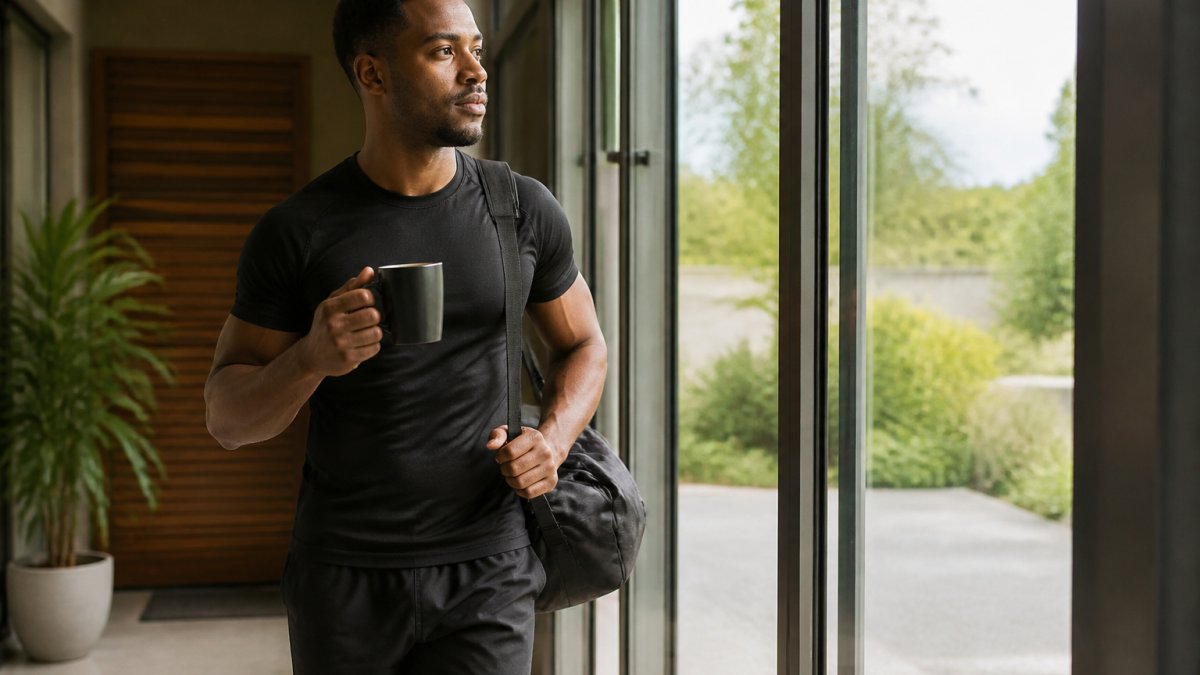
Caffeine enhances force and power during strength training. Muscles contract more forcefully with caffeine in your system, so you can lift heavier or perform more reps at the same weight.
The effect is most pronounced in compound movements:
- Squats and deadlifts
- Bench press and overhead press
- Rows and pull-ups
Many athletes add one or two extra reps per set after black coffee. The improvement is real, though responses vary with caffeine tolerance and body weight.
Endurance and Aerobic Capacity
Black coffee improves aerobic performance by enhancing fat oxidation. Burning more fat spares muscle glycogen, letting you train longer before fatigue sets in.
For endurance activities, caffeine helps you maintain your pace:
- Running longer distances
- Cycling at steady intensity
- Swimming continuous laps
Perceived exertion drops when caffeine is active, a hard pace feels moderate. This psychological effect is as valuable as the physical one, letting you push harder without feeling wrecked.
Focus and Perceived Effort
One of the most underrated benefits is mental sharpness. Black coffee sharpens focus on form, breathing, and strategy during the workout.
This mental edge affects how hard your workout feels:
- Distractions fade away
- You stay locked in on each rep
- Your mind doesn't wander during cardio
Research suggests caffeine makes difficult efforts feel more manageable, often the difference between a mediocre session and a great one.
Coffee Before Workout Timing: When to Drink It
Caffeine peaks in your bloodstream 15-45 minutes after drinking. For most people, 30 minutes before training is ideal.
This timing strategy works best:
- Drink your coffee 20-40 minutes before you start
- Peak caffeine lands during your main sets
- The boost carries through your entire session
If training very early, drink coffee immediately after waking so you're ready by the time you reach the gym or trailhead. For afternoon or evening workouts, stick to the 30-minute window to avoid sleep disruption.
How Much Caffeine Before a Workout
Dose is where most pre-workout coffee advice falls apart. "One cup" means almost nothing, because an 8-ounce cup of drip coffee can land anywhere from about 95 to 200 milligrams of caffeine depending on the bean, the roast, and the brew method.
The widely used performance range is 3-6 milligrams of caffeine per kilogram of body weight, taken roughly 30-60 minutes before exercise. Here is what that looks like in practice, using a standard 8-ounce drip cup at roughly 95 milligrams as your unit:
| Body weight | 3 mg/kg (low end) | 6 mg/kg (high end) | Cups at ~95 mg |
|---|---|---|---|
| 120 lb (54 kg) | ~163 mg | ~327 mg | ~1.7 to ~3.4 cups |
| 150 lb (68 kg) | ~204 mg | ~409 mg | ~2.1 to ~4.3 cups |
| 180 lb (82 kg) | ~245 mg | ~490 mg | ~2.6 to ~5.2 cups |
| 210 lb (95 kg) | ~286 mg | ~572 mg | ~3.0 to ~6.0 cups |
Those cup counts look high because most people underestimate caffeine per mug. A 12-ounce travel mug of drip is closer to 140-180 milligrams, a double espresso roughly 120-150 milligrams, and cold brew concentrate runs higher per ounce, measure rather than guess.
Start low, then titrate
Do not begin at the top of the range. A practical protocol:
- Baseline week: one 8-ounce cup (~95 mg) about 30 minutes before training. Note energy, focus, jitters, and stomach comfort.
- Step up: if the effect is flat and you tolerate it well, add half a cup (~45 mg) on your next hard session.
- Cap it: stop increasing once you hit either your 6 mg/kg ceiling or the point where side effects appear, whichever comes first.
- Hold steady: once you find a dose that works, keep it fixed for 2-3 weeks before changing anything, so you can actually attribute results.
The safe upper limit
For healthy adults, the commonly cited ceiling is about 400 milligrams of caffeine per day from all sources, per FDA guidance. That is roughly four 8-ounce cups of drip coffee. If you are already a multi-cup daily drinker, your pre-workout dose counts toward that total, not on top of it. People who are pregnant, have cardiovascular conditions, take certain medications, or are sensitive to caffeine should talk to a clinician before using caffeine for performance.
Adjust for tolerance and sensitivity
Habitual drinkers develop tolerance and often need a dose near the top of the range. Occasional drinkers may get a clear effect from 1-2 mg/kg, well below the performance range. If highly sensitive, start at half a cup and treat that as your ceiling. Genetics, body composition, and metabolism shift the number, so treat the table as a starting point, not a prescription.
If you want a stronger hit without drinking more volume, a higher-caffeine blend or a finer grind for espresso-style brewing concentrates the dose per ounce. Choose the bean and grind that let you hit your target in one mug rather than three.
Coffee Before Workout Side Effects
Black coffee can cause unwanted effects if you're sensitive to caffeine or overdo the dose.
Watch for these potential issues:
- Jitters or anxiety during your workout
- Nausea or stomach upset
- Elevated heart rate that feels uncomfortable
Caffeine has a mild diuretic effect, so drink water before, during, and after your workout. This simple step reduces most side effects.
If negative effects appear, cut your dose to half a cup. Tolerance builds with regular use, so your body adapts over time.
Coffee Before or After Workout: Which Works Better
The before-versus-after question matters less than what's in your cup. Understanding what black coffee delivers, and what it doesn't, tells you when to use it and when another choice fits better.
What black coffee brings to a pre-workout
- A predictable caffeine dose you can measure and repeat, unlike a scoop of an unlabeled blend.
- No added sugar or fat to slow digestion or add calories before training.
- A short, simple ingredient list: coffee and water.
What changes when you add milk or sugar
Milk, cream, or sugar don't remove caffeine but change the drink's role. Fat and protein slow gastric emptying, pushing the caffeine peak later and blurring timing. Sugar adds calories and can spike then drop energy mid-session. For a clean, timed boost, black coffee keeps the variable to one: caffeine.
Black coffee versus caffeine supplements and pre-workout powders
Commercial pre-workouts and caffeine pills offer precise, label-stated milligrams, their main advantage. The trade-offs:
- Pills and powders often carry additional stimulants, sweeteners, or proprietary blends whose combined effect is hard to isolate.
- Black coffee gives you caffeine plus the ritual of a hot drink, with no mystery ingredients, but the dose varies by bean and brew unless you measure it.
- Cost per serving usually favors brewed coffee, and you control exactly what goes in.
If you want a single controllable variable and prefer a drink to a capsule, black coffee is simpler. If you need a guaranteed milligram count and nothing else, a measured caffeine source is more precise.
Before versus after, decided
- Before training: caffeine is active during your hardest efforts, which is where the performance benefit lives. This is the default for strength, power, and endurance sessions.
- After training: coffee can support alertness and recovery routine, but the performance edge is gone once the workout ends. Do not expect a post-workout cup to make the session you already finished better.
Protect your sleep
Caffeine's half-life is roughly 5 hours in most adults, about half is still circulating five hours after your last sip, a quarter after ten. For late-day trainers, set a cutoff: a cup at 5 p.m. may still be active at 10 p.m. Many people find a cutoff 8-10 hours before bed keeps sleep intact. If evening training is unavoidable, use a smaller dose earlier in the day rather than a full cup right before the session.
For a clean pre-workout cup, choose a bean and grind that brew consistently so your milligram estimate stays stable from session to session.
Personalizing Your Black Coffee Strategy
Your ideal black coffee routine depends on your response, workout type, and goals. Caffeine sensitivity varies widely with genetics, regular consumption, and body composition.
Testing Your Caffeine Tolerance
Start with a simple protocol to find your optimal dose:
- Pick a regular workout day and time
- Drink one cup of black coffee 30 minutes before training
- Track how you feel during the workout (energy, focus, jitters, stomach)
- Record your performance (weight lifted, distance covered, pace maintained)
- Repeat for 2-3 weeks to establish a baseline
- Adjust the amount or timing based on your results
Some thrive on one cup; others need two or a higher-caffeine blend. A few are so sensitive that even small amounts cause jitters. Test different amounts to find your sweet spot.
Keep notes on your response, tolerance may change seasonally or as training intensity shifts.
Adjusting for Workout Type and Duration
Different workouts benefit from different doses. Short, intense strength sessions need peak caffeine during main lifts; longer endurance efforts benefit from sustained levels throughout.
Match your coffee strategy to your workout:
- Strength training (30-60 minutes): One standard cup, 30 minutes before
- Endurance training (60+ minutes): One to two cups, 30-45 minutes before
- Mixed training: One cup for moderate sessions, two cups for high-intensity days
Daily drinkers develop tolerance and need more caffeine for the same effect; occasional drinkers feel stronger effects from smaller amounts.
The Bottom Line
Black coffee before workouts enhances energy, alertness, strength, power, endurance, and focus. Timing is critical, drink it 20-40 minutes before training.
Start with one cup and adjust based on how you feel. Stay hydrated to minimize side effects. Our Max Caf Blend and Breakfast Blend + provide the caffeine boost you need to maximize your workout performance.

Frequently Asked Questions
Is black coffee before the gym good for workout performance?
Yes. Black coffee delivers caffeine directly to your system without added calories or sugar. Caffeine stimulates your central nervous system, increasing alertness, reducing perceived effort during exercise, and improving focus. For strength and endurance work, this can translate to better performance. The effect is most noticeable if you don't drink coffee regularly, though consistent users still benefit.
How long before a workout should you drink black coffee?
Drink black coffee 30-60 minutes before your workout. Caffeine reaches peak blood levels in this window, giving you maximum alertness and performance boost right when you need it. If you have a sensitive stomach, aim for the longer end of that range to minimize digestive discomfort during exercise.
Can drinking coffee before exercise cause side effects?
Possible side effects include jitters, increased heart rate, stomach discomfort, and sleep disruption if consumed late in the day. These are most common in people new to caffeine or sensitive to it. Start with a smaller dose to assess your tolerance. Drink water alongside your coffee to stay hydrated, since caffeine has a mild diuretic effect.
Is it better to drink black coffee before or after a workout?
Black coffee works best before your workout to boost performance and focus during exercise. Drinking it after your workout offers minimal performance benefit, though some athletes use it for recovery focus. For maximum impact on strength, power, and endurance, consume it 30-60 minutes before you train.
Black coffee before workouts is a simple, effective tool for improving your performance. The key is finding your personal sweet spot for timing and dose. At Ridgeline Trail & Coffee, we've crafted high-quality blends to support your active lifestyle. Explore our coffee collection today and discover how the right brew can elevate your training sessions.