 how-to
7 Ski Glove Warmth Mistakes That Leave Your Hands Cold
Last Updated: October 25, 2026
Quick Summary
Ski glove warmth comes from matching insulation, shell, and fit to your real conditions, not from a label. Dry cold favors down, wet snow and sweat favor synthetic, and a snug wrist with roomy fingertips keeps circulation flowing so your hands stay warm.
- Down packs the most warmth per ounce but loses heat when wet, so pair it with a waterproof shell.
- Synthetic insulation keeps warming when damp and is the safer default if you are unsure.
- Mittens keep hands warmer than gloves of the same insulation because fingers share one heated space.
- Fit the shell with any liner in place, and size up rather than down if you are between sizes.
- Pull damp liners out at lunch and swap in a dry pair, because dry insulation is warm insulation.
Table of Contents
- Start With the Conditions, Not the Glove
- Ski Glove Insulation Types: Down, Synthetic, and What They Do
- Ski Gloves vs Mittens: Which Keeps Hands Warmer
- How Ski Gloves Should Fit for Warmth and Circulation
- Ski Gloves With Removable Liners: Layering for Cold Days
- Waterproofing, Breathability, and Shell Materials
- Common Mistakes That Make Your Hands Cold
- Fuel Your Next Cold Day With Ridgeline Trail & Coffee
- Frequently Asked Questions
Start With the Conditions, Not the Glove
Most people buy ski gloves the way they buy socks: grab a pair that looks warm, hope for the best. That approach fails because ski glove warmth is not a single quality you can spot on a shelf. It comes from how insulation, shell fabric, and fit work together for the specific cold your hands will meet.
Start by naming your real conditions:
- Resort skiing with frequent lift rides: wind exposure matters more than deep cold.
- Deep winter days in single digits: insulation volume and a windproof shell carry the load.
- Spring skiing and wet snow: waterproofing beats extra fill.
- High-exertion touring or hiking: breathability and dexterity beat maximum warmth.
Write down your typical day before you shop. That single step filters out half the wrong options.
Ski Glove Insulation Types: Down, Synthetic, and What They Do
Ski glove insulation types fall into two families: down and synthetic. Each traps warmth differently, and each has a clear best use. The bigger issue is that "insulated" on a hangtag tells you nothing about how much warmth you are buying, so the useful skill is reading the fill and matching it to your conditions.
Down insulation uses clusters of feathers to trap heat. It packs warmth per ounce better than anything else and feels light on the hand. The trade-off: down loses warmth when it gets wet, so it belongs in a glove with a solid waterproof shell or on dry, bitter-cold days.
Synthetic insulation uses polyester-based fills that keep warming even when damp. It costs less, dries faster, and tolerates sweat better. It is heavier for the same warmth, which is why synthetic gloves feel bulkier.
A quick way to think about it:
| Insulation | Warmth per ounce | Handles moisture | Best for |
|---|---|---|---|
| Down | Highest | Poor when wet | Dry, extreme cold |
| Synthetic | Moderate | Good | Wet snow, high exertion |
How to Match Insulation Volume to Your Conditions
Instead of guessing, work through three questions in order:
- How cold is your typical day? Mild days near freezing need a thin fill or a shell with a light liner. Single-digit days need a heavier fill and a windproof shell. Deep cold with wind is where down earns its place.
- How wet will your hands get? Wet snow, rain, and heavy sweating favor synthetic. Dry cold favors down.
- How much do you move? High-output touring generates heat, so a lighter fill plus breathability beats maximum warmth. Lift rides and standing around favor more insulation.
A simple decision path: if your hands run cold and you ski in dry cold, choose down with a waterproof shell. If you ski wet snow or sweat heavily, choose synthetic. If you are unsure, synthetic is the safer default because it tolerates damp.
Interpreting Warmth Claims and Temperature Ratings
Warmth ratings on ski gloves are not standardized across manufacturers. One brand's "extreme cold" glove may be another brand's mid-weight glove, and a rating tested on a static hand tells you little about a hand gripping a pole in wind.
A practical approach is to read the fill type and weight, check whether the shell is windproof and waterproof, and then adjust for how easily your hands get cold.
Ski Gloves vs Mittens: Which Keeps Hands Warmer
Mittens win on raw warmth. Fingers share one heated space instead of sitting in separate cold pockets, so mittens keep hands warmer than gloves of the same insulation. Ski gloves win on dexterity: buckles, zippers, and phone screens all demand fingers.
The practical answer is not one or the other. It is matching the handwear to the task:
- Lift rides and cold-sensitive hands: mittens.
- Adjusting bindings and gear: gloves.
- Long, brutal cold days: mittens with a thin liner glove underneath.
How Ski Gloves Should Fit for Warmth and Circulation
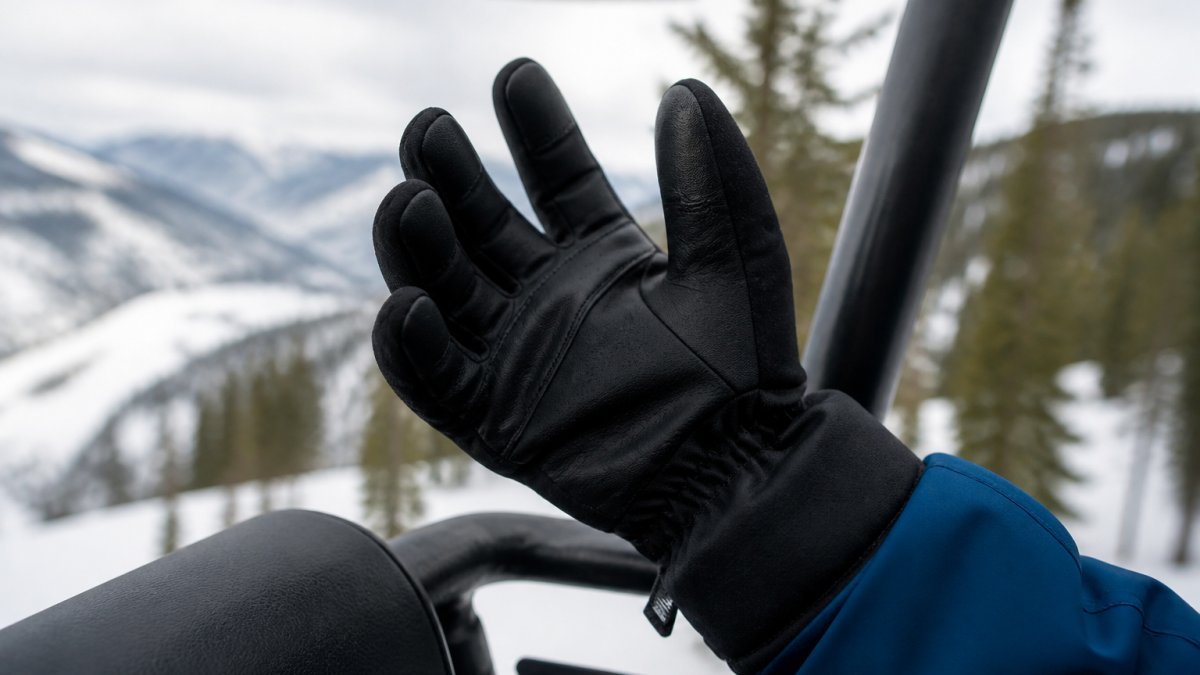
How ski gloves should fit comes down to one rule: snug at the wrist, roomy at the fingertips. A glove that is too tight squeezes blood flow, and poor circulation means cold hands no matter how much insulation you paid for.
A Simple At-Home Fit Check
Do this before you commit to a pair, and repeat it after ten minutes of wear when your hands have warmed and swollen slightly:
- Make a fist. The glove should not pinch across the knuckles.
- Flex each finger. You want full movement with no tightness.
- Check the fingertips. A small air gap at the end traps warmth; a glove that pulls tight across the fingertips is too short.
- Close your wrist strap. It should feel secure, not tight, and you should still be able to slide a finger under it.
- Wiggle your thumb. It should reach the thumb slot without strain.
- Press the back of your hand. The shell should not press hard against the skin when you grip.
If your fingers go numb or tingle within minutes, the glove is too small. Size up or try a different cut. A common mistake is buying gloves that feel perfect in the store but bind once your hands warm up and swell.
How Fit Interacts With Liners and Layering
If you plan to wear a thin liner or use a glove's removable liner, fit the shell with the liner in place. Layered gloves fit tighter, so size up if you plan to double up.
Liners also bunch at the fingertips if they are too long, which kills dexterity fast. Check that the liner sits smooth and does not fold when you make a fist.
Circulation Is the Real Warmth Switch
Warmth starts with blood flow. A glove that restricts the wrist or pinches the knuckles reduces circulation, and no fill weight compensates for that.
A practical fix: loosen the wrist strap one notch and see whether your fingers warm up. If they do, the glove was too tight, not too thin. Cold-sensitive skiers should prioritize a relaxed fit and a windproof shell over extra insulation.
Fit is also where liners and shells have to agree. If you use a removable liner, fit the shell with the liner in place so the two do not fight for space.
Ski Gloves With Removable Liners: Layering for Cold Days
Ski gloves with removable liners give you a glove system instead of a single glove. The outer shell blocks wind and wet snow.
Layering works like this:
- Start with a thin merino or synthetic liner against the skin to move sweat away.
- Add the glove's own removable liner on colder days.
- Wear the shell alone on mild days or when you are working hard.
The benefit is range. One pair of shells plus two liners covers more conditions than three separate gloves. The catch: layered gloves fit tighter, so size up if you plan to double up.
A second practical use: pull damp liners out at lunch and swap in a dry pair. Dry insulation is warm insulation.
Waterproofing, Breathability, and Shell Materials
Wet hands are cold hands, and no amount of insulation fixes soaked gloves. That makes the shell the quiet hero of ski glove warmth.
Waterproofing comes from a membrane or a treated leather shell. A true waterproof membrane blocks liquid water while letting vapor escape.
Breathability matters more than most skiers realize. Sweat trapped inside a glove chills your fingers on the next lift ride. Vented shells and moisture-wicking liners help vapor escape before it becomes a problem.
Shell materials set the durability and feel:
- Leather: great grip and durability, needs treatment to stay water-resistant.
- Synthetic fabric: lighter and cheaper, less abrasion resistance.
- Palm reinforcement: adds life where you grip poles and edges.
Common Mistakes That Make Your Hands Cold
The same errors show up again and again, and each one undercuts ski glove warmth you already paid for.
- Buying for looks, not conditions. A stylish glove with thin fill fails on a windy summit.
- Sizing down for a "snug" feel. Tight gloves cut circulation and cause cold fingers.
- Skipping the wrist strap. A loose cuff lets cold air and snow straight in.
- Ignoring wind protection. Wind strips warmth faster than still cold air does.
- Wearing cotton liners. Cotton holds sweat against the skin and chills your hands.
- Never drying gloves. Damp insulation loses warmth and stays cold all day.
- Trusting vague warmth claims. "Extreme cold rated" means little without a stated standard.
Watch out: the biggest offender is tight sizing. Skiers chase a locked-in feel and end up with gloves that choke blood flow. Warmth starts with circulation, not fill weight.
Fuel Your Next Cold Day With Ridgeline Trail & Coffee
Cold hands and cold mornings both call for good gear and a hot cup. That is the thinking behind our coffee collection at Ridgeline Trail & Coffee: single-serve specialty coffee built for early starts and long days outside.
Pack a Ridgeline Trail Box Roasters Choice for the cabin or the tailgate, and pair it with our printable brew guide and trail journal bundle to plan the next outing. Warm hands, warm cup, better day.
Frequently Asked Questions
How should ski gloves fit for warmth?
Ski gloves should fit snugly but leave enough room to wiggle your fingers and make a loose fist. There should be about a quarter inch of space at the fingertips, and the cuff should close over your jacket without pinching your wrist. Gloves that are too tight restrict blood flow, which makes your hands cold no matter how much insulation they have. Try gloves on with the liner you plan to wear and flex your hands several times before buying.
Are mittens warmer than gloves for skiing?
Mittens are generally warmer than gloves because your fingers share one insulated space, which reduces heat loss. Gloves offer better dexterity for adjusting bindings, zippers, and poles. For very cold days or if you have poor circulation, mittens or a mitten-glove hybrid are worth considering. Many skiers carry both and switch based on the forecast.
What insulation is warmest for ski gloves?
Down insulation provides the most warmth for its weight and compresses well, but it loses warmth when wet. Synthetic insulation keeps some warmth when damp and dries faster, which matters in wet snow. Many ski gloves combine a waterproof shell with synthetic insulation for reliable performance. The warmest option depends on your conditions, activity level, and whether you run hot or cold.
Should ski gloves have removable liners?
Removable liners add versatility. You can wear a thin liner on milder days, add a heavier liner for extreme cold, or remove a wet liner to dry it separately. Liners also make it easier to adjust warmth without buying multiple pairs of gloves. Look for liners that stay put when you pull your hand out, and check that the outer glove still fits comfortably with the liner in place.
Cold fingers usually trace back to a mismatch, not bad luck: the wrong insulation for your conditions, a glove that fits too tight, or a shell that soaks through. Fix those three and most cold-hand problems disappear. Ridgeline Trail & Coffee pairs practical outdoor gear with premium single-serve coffee, so your hands stay warm and your cup stays full. Get started with Ridgeline Trail & Coffee and fuel your next cold day from first lift to last run.